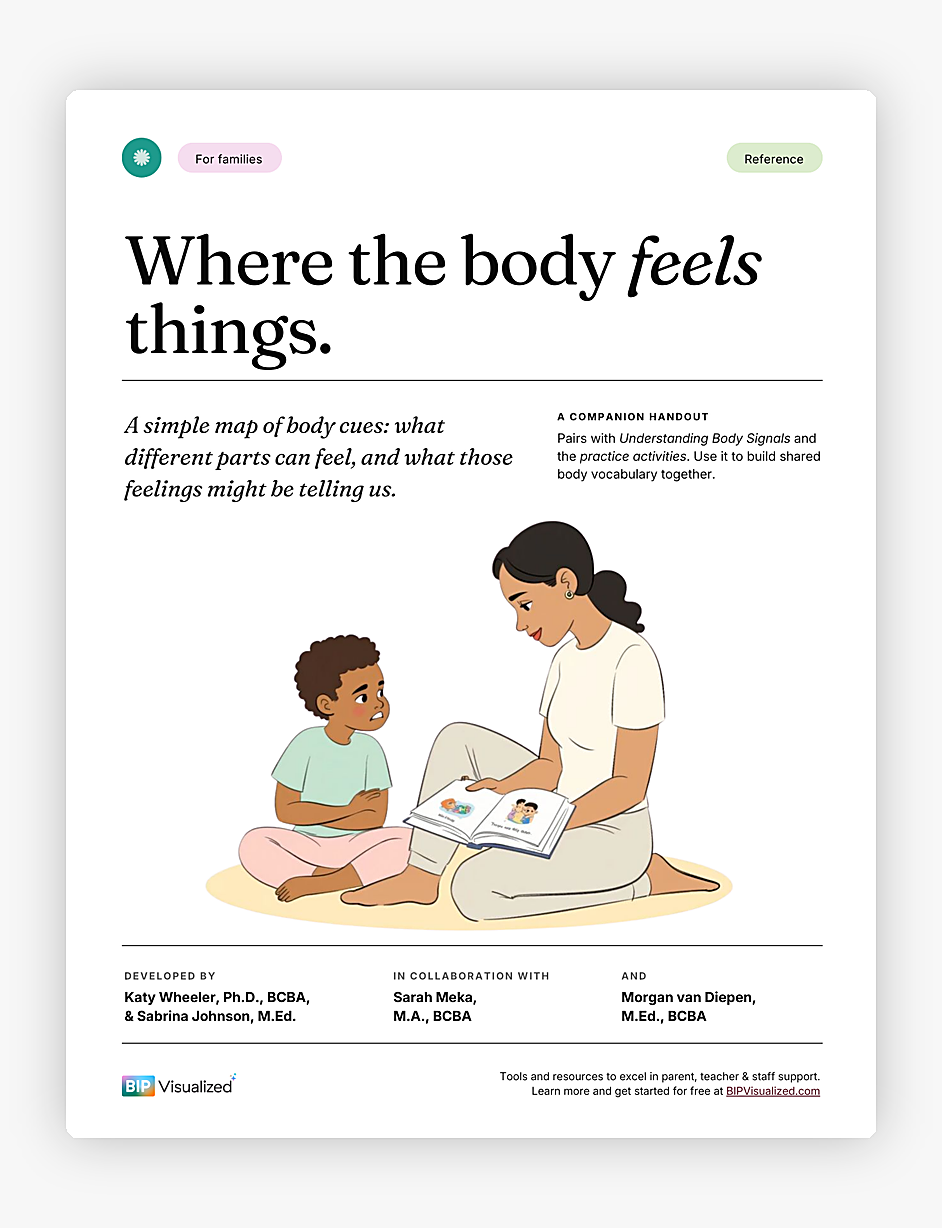
Where the Body Feels Things
This 5-page visual reference map helps children identify and name what they're feeling — and gives the entire support team a consistent, individualized vocabulary for body signals. It covers eight body areas (four external, four internal) with sensation words and emotional meanings for each.
What You'll Learn
- What external cues — skin, cheeks, mouth, and hands — can signal about a child's regulatory state
- What internal cues — muscles, heart, stomach, and lungs — feel like and what those sensations might mean
- How to use a "clues, not rules" approach that meets each child where they are
- How to use this map to build consistent, individualized language across home, school, and therapy settings
Who Is This For
BCBAs and practitioners who provide parent consultation and want an illustrated, accessible reference for building consistent regulation language across the entire support team.
📤 Share this resource with every family you work with — available for free, no subscription required.
Access Resource