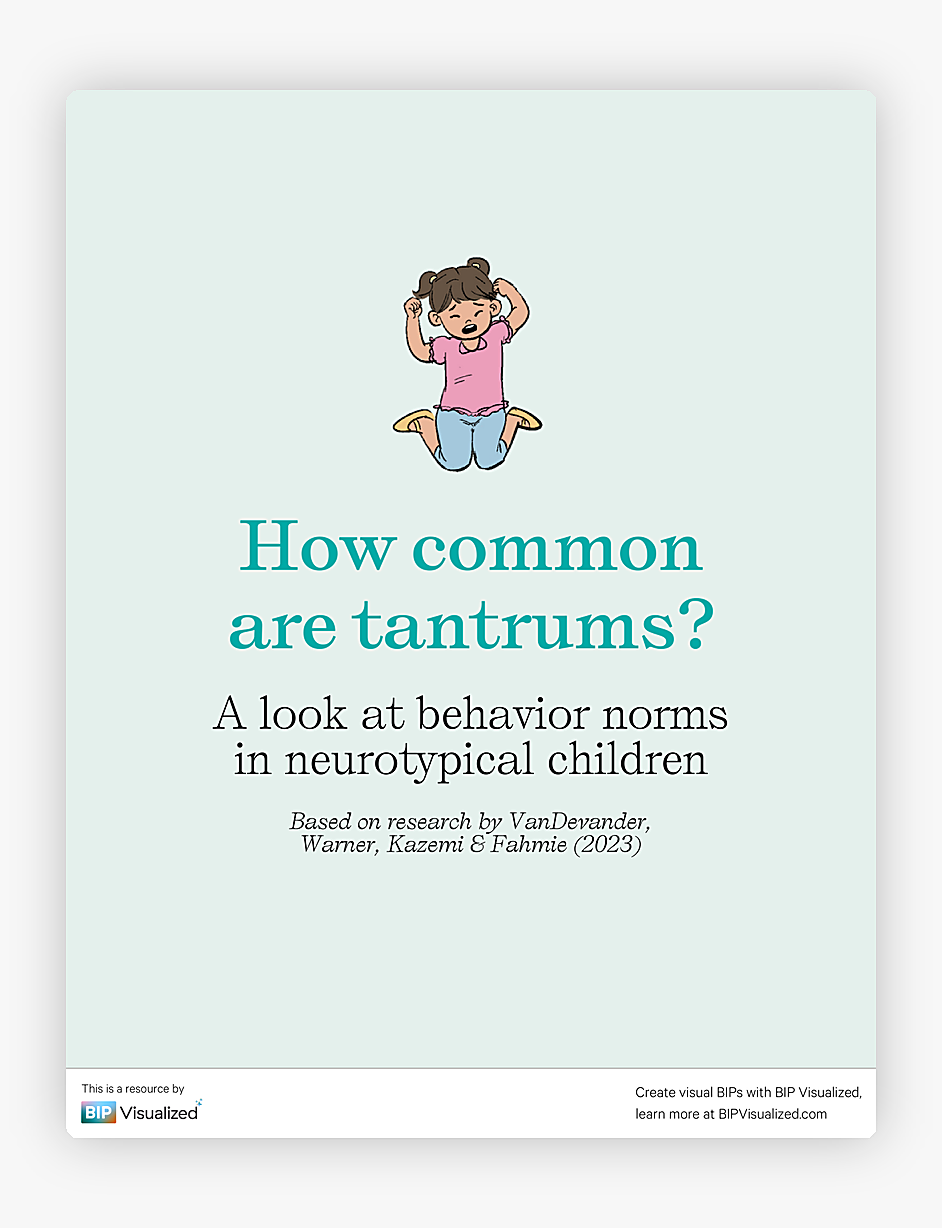
Behavior Norms in Neurotypical Children
Is the behavior reduction goal you’re writing actually fair for this child’s age?
Without developmental data, even experienced BCBAs are writing goals based on assumptions — and those goals are harder to defend in supervision, family meetings, and peer review.
This free 22-page guide is built on peer-reviewed research (VanDevander, Warner, Kazemi & Fahmie, 2023). It gives you real norms for tantrums, aggression, non-compliance, and crying — broken down by age group — so you can set goals that are grounded, fair, and clinically defensible.
What’s Inside
- Research data on typical tantrum frequency, intensity, and duration across age groups
- Norms for aggression, non-compliance, and crying in neurotypical children
- A framework for distinguishing clinical concern from typical development
- How to write mastery criteria that are fair, individualized, and defensible
- Direct application to BACB test outline H.1 — Setting Effective Behavior Reduction Goals
Who Is This For
BCBAs setting behavior reduction goals for young children, supervising goal appropriateness, preparing for the BCBA exam, or explaining goal rationale to families and school teams.
🆓 It’s free. Create a free account at BIPVisualized.com — no subscription required. Get access instantly.